
The Trump Enigma
In the ever-thrilling arena of American politics, no figure has dominated headlines and fueled debates quite like Donald J. Trump. Since his departure from the White House, Trump has been a persistent presence in the public eye. The buzz around his potential return in 2024 is deafening. However, there’s a constitutional stumbling block that could stand in his way – the 14th Amendment’s Article 3 provisions. Brace yourselves, because this is a tale of legal intrigue, potential disqualification, and the allure of write-in campaigns.
The 14th Amendment’s Article 3 Provisions: Unearthing a Century-Old Tool
Before we really delve into Trump’s precarious predicament, let’s decode the cryptic 14th Amendment’s Article 3:
“No person shall be a Senator or Representative in Congress, or elector of President and Vice-President, or hold any office, civil or military, under the United States, or under any State, who, having previously taken an oath, as a member of Congress, or as an officer of the United States, or as a member of any State legislature, or as an executive or judicial officer of any State, to support the Constitution of the United States, shall have engaged in insurrection or rebellion against the same, or given aid or comfort to the enemies thereof. But Congress may by a vote of two-thirds of each House, remove such disability.”
This 150-year-old provision, born from the ashes of the Civil War, aimed to prevent former Confederates from waltzing back into power. It bars those who have actively rebelled against the United States from holding public office. Crucially, it doesn’t demand a court conviction but leaves room for interpretation.
Historical Precedent: Victor Berger’s Exclusion
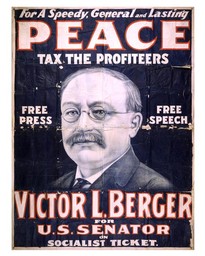
The 14th Amendment’s Article 3 has rarely been invoked, but it’s not a relic. In 1919, the U.S. Senate used Article 3 to bar Victor Berger, a Socialist Congressman, from taking his seat. Berger had openly advocated for the overthrow of the U.S. government during World War I, and his disqualification was upheld. This case serves as a historical reference point for how the provision can be wielded.
Modern Ambiguities: Trump and the Capitol Riot
Fast forward to modern times, and the application of Article 3 is a matter of intense debate. Some legal scholars argue that Trump’s involvement in the January 6th Capitol riot could be interpreted as an act of insurrection or rebellion. Others counter that the provision’s language is too narrowly defined to encompass such events.
The Legal Conundrum: Trump on the Ballot or Not?
The central question looms large: can Article 3 be used to prevent Trump from gracing the election ballot? The answer, like many legal matters, hinges on interpretation. Critically, Article 3 doesn’t require a criminal conviction but focuses on whether one has “engaged in insurrection or rebellion.”
The events of January 6th, 2021, when a violent mob stormed the U.S. Capitol in an attempt to overturn the election results, left an indelible mark on American history. Trump’s second impeachment, charged him with incitement to insurrection, ended in acquittal. However, this acquittal doesn’t absolve him of potential consequences under Article 3.
The argument for disqualification would revolve around whether Trump’s actions, including his inflammatory rhetoric and attempts to overturn the election results, constitute an act of insurrection or rebellion against the United States. Legal scholars remain divided on this front, ensuring a lively legal and political tango.
Trump’s Defenders and the Allure of Write-In Campaigns
If Trump were barred from the ballot, his devoted followers would mobilize, and the term “write-in campaign” would resonate anew. But what exactly is a write-in campaign, and what are its chances of success in the unpredictable world of American politics?
Write-In Campaigns Unveiled
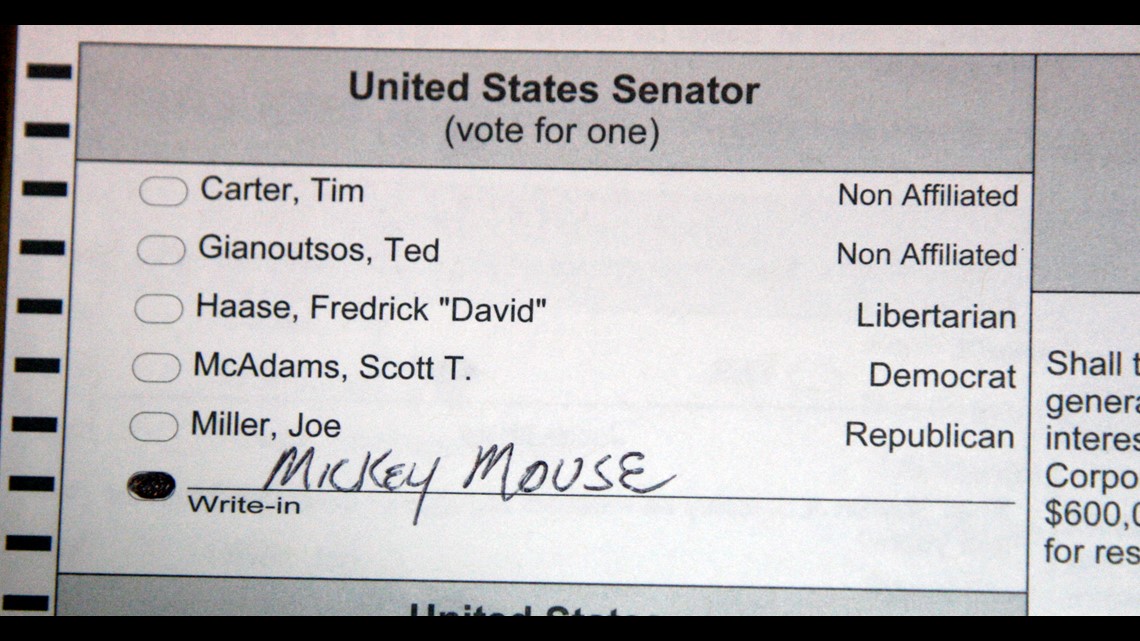
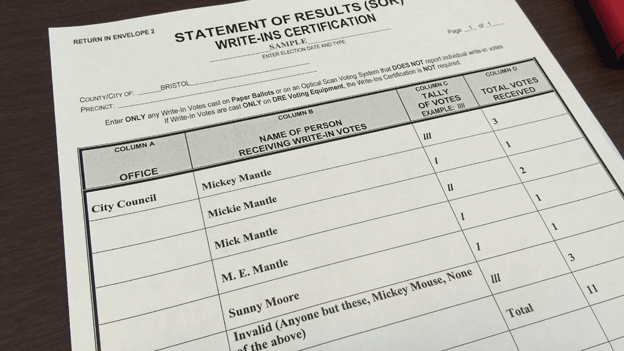
A write-in campaign is an electoral strategy where voters manually write in a candidate’s name on the ballot when their name isn’t officially listed. It’s often used by third-party or independent candidates who fail to secure a spot on the official ballot. While rare, write-in campaigns have ignited sparks in American politics.
Notable Example A of Write-In Campaign
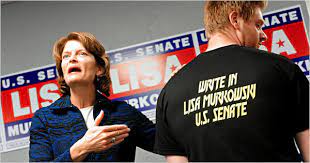
One iconic example is Senator Lisa Murkowski’s 2010 Alaska Senate race. After losing the Republican primary, she embarked on a write-in campaign and emerged victorious. This was a rare success story and demonstrated that under the right circumstances, write-in candidates can overcome the odds.
Challenges and Complexities: Trump’s Potential Write-In Campaign
The prospect of a nationwide write-in campaign for Trump is tantalizing, but it faces formidable hurdles. Here’s a glimpse into the challenges that would be encountered:
- State Election Laws: The United States’ election procedures are predominantly determined at the state level. Each state has its own rules regarding write-in candidates. While many states permit write-ins, they often impose specific requirements. For instance, some states demand write-in candidates to file paperwork or register before the election.
- Counting Challenges: Some states don’t count votes for write-in candidates who haven’t officially registered. This raises logistical and strategic obstacles for Trump’s campaign.
- Two-Party Stranglehold: The U.S. political landscape is firmly entrenched in a two-party system. Trump’s write-in campaign would need to grapple with the enormous influence and resources of the established parties, making it an uphill battle.
A Web of Uncertainties
As the political pendulum swings, the prospect of Trump’s disqualification under the 14th Amendment’s Article 3 provisions adds yet another layer of intrigue to the American political drama. The legal interpretation of this provision will continue to be a subject of heated debate, potentially reaching the courts.
If Trump’s path to the ballot is obstructed, a nationwide write-in campaign might seem like a lifeline. However, the complexities of navigating state election laws, the Herculean task of challenging the two-party system, and the unpredictability of voter sentiment make it a daring endeavor.
In the end, the Trump saga is an evolving narrative, replete with uncertainties. One thing is certain: the drama surrounding his potential return to power will continue to captivate and divide the American public, solidifying its place in the annals of U.S. political history.
***UPDATE***
On November 14, 2023 Michigan Court of Claims Judge James Redford rejected arguments that former President Trump’s role in the January 6, 2021 attack on the US Capitol meant the court must declare him ineligible for the Office of President of the United States. The Judge wrote that, “. . .because Trump followed state law in qualifying for the primary ballot, he cannot remove the former President from the ballot.” He opined that it was up to the US Congress to ascertain whether or not Trump’s actions and behaviors rose to the level of, “. . . engag[ing] in insurrection or rebellion against the same (US Government), or giv[ing] aid or comfort to the enemies thereof.” In concluding his opinion he wrote that, as a single judge on the bench, he cannot, “. . .in any manner or form possibly embody the represented qualities of every citizen of the Nation — as does the House of Representatives and Senate.” Judge Redford stated that it is likely that this case or a similar one will land in the US Supreme Court as it has never ruled on an insurrection case. (Corey Williams and Nicholas Riccardi of the Associated Press, November 14, 2023 -4:04 PM EST).

